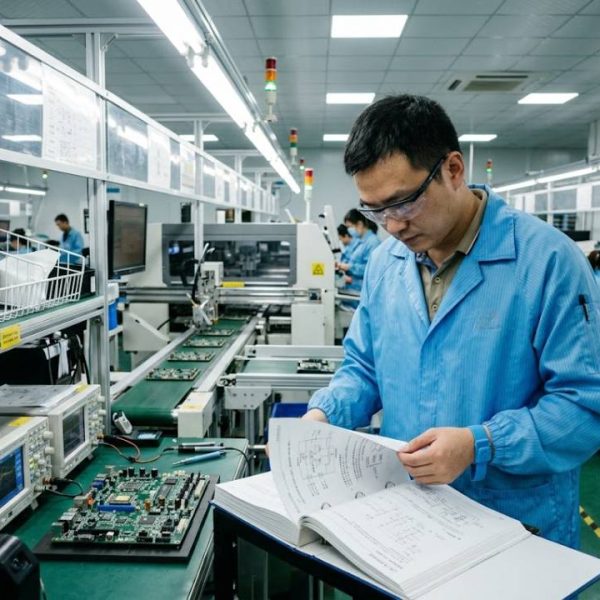
China files more patent applications than any other country and manufactures a huge share of the world's electronics, machinery and components. For companies on both sides of that trade, technical documents cross the language border every day. Specifications, patent claims, test reports, safety data sheets and user manuals all have to work in Chinese and in English.
Technical translation between these two languages is demanding. The scripts are different, the grammar works in a completely different way, and a mistranslated term can lead to a rejected patent, a failed audit or a product that is used incorrectly.
Why Chinese technical texts are hard to translate
Chinese does not mark plural, tense or articles the way English does. Meaning often depends on context and on how characters combine into technical compounds. A term like 控制器 can mean controller, regulator or control unit depending on the device. Long Chinese sentences with several nested conditions must be restructured into clear English without losing a single technical limitation.
The translator has to understand the technology, not only the words. Without that understanding, the result may read smoothly but describe a different machine.
Patent translation: where every word counts
Patents are a special case. The claims define what is protected, and their scope depends on precise wording. If a translation narrows a claim, the owner loses protection. If it broadens a claim beyond the original disclosure, the patent can be challenged. That is why patent translators combine engineering knowledge with an understanding of patent practice in China, Europe and the United States.
Researchers and attorneys often start with existing filings. The WIPO PATENTSCOPE database gives access to millions of international and national patent documents, including Chinese filings, which helps translators check how a term has been rendered in earlier, related patents.
Common technical documents between Chinese and English
- Patent applications, office actions and prior art searches
- Product specifications and datasheets
- Installation, operation and maintenance manuals
- Quality certificates, test reports and audit findings
- Safety data sheets and regulatory submissions
- Software interfaces and engineering drawings
Terminology management is the foundation
Large technical projects involve thousands of terms. If one manual says "pressure relief valve" and the next says "safety valve" for the same part, service technicians get confused and spare parts get ordered wrongly. A shared terminology database, agreed with the client's engineers, keeps every document aligned.
Translation memory tools add another layer. They store every translated sentence, so updates to a manual only require the changed parts to be translated. This saves cost and keeps wording stable across product generations.
Simplified or Traditional Chinese?
Mainland China uses Simplified Chinese, while Taiwan and Hong Kong use Traditional characters. Technical vocabulary also differs between these markets. A manual written for Shenzhen may need real adaptation, not just a character conversion, before it is suitable for Taipei. Clarify the target market at the start of each project.
Choosing a technical translation partner
Ask potential providers about their engineering background, their experience with your industry and the review process. Strong teams pair a technical translator with a second specialist reviewer and work closely with the client's product experts on unclear points.
PoliLingua offers technical translation services for manufacturing, engineering and industrial companies, covering Chinese and many other languages, with subject specialists, terminology management and support for complex file formats such as CAD exports and technical publishing tools.
Specialist work like this is usually priced and scheduled project by project. Independent freelance translators who handle patents and manuals rely on clear invoicing routines, agreed payment terms and prompt follow-up to keep their schedules predictable. Clients who understand those billing habits get clearer quotes and fewer delays when a filing deadline moves. In a field where one missed date can cost protection, that reliability is part of the service itself.
Formats and layout
Technical documents rarely arrive as simple text. They come as InDesign files, XML from documentation systems, PDFs with embedded drawings or spreadsheets of part numbers. Chinese text is usually shorter in length than English, so layouts must be adjusted after translation. Labels on diagrams need to be extracted, translated and placed back without breaking the design. Planning for this desktop publishing step avoids surprises at the end.
Machine translation and its limits
Neural machine translation between Chinese and English has improved a great deal. It can speed up first drafts of repetitive content such as parts lists. For patents, safety instructions and regulatory documents, however, full human review by a subject expert remains essential. Errors in these texts carry legal and safety consequences that no company should accept.
Units, standards and local regulations
Technical translation also means adapting references. Chinese documents cite GB national standards, while European buyers expect EN or ISO references and American customers look for ANSI or UL. Units, tolerances and electrical ratings must be checked carefully. A good translator flags these points instead of silently converting them, so the engineering team can confirm the right equivalent.
Protecting confidential information
Unpublished patent applications and product designs are among a company's most valuable assets. Make sure your translation provider uses secure file transfer, limits access to the project team and has confidentiality agreements in place with every linguist. Ask, too, whether any online tools are used and where the data is processed.
The bottom line
Between Chinese and English, technical translation is a bridge between engineers, lawyers and customers. Specialist translators, solid terminology and careful review protect both your intellectual property and your users. With the right partner, every manual and every patent says exactly what your engineers meant.